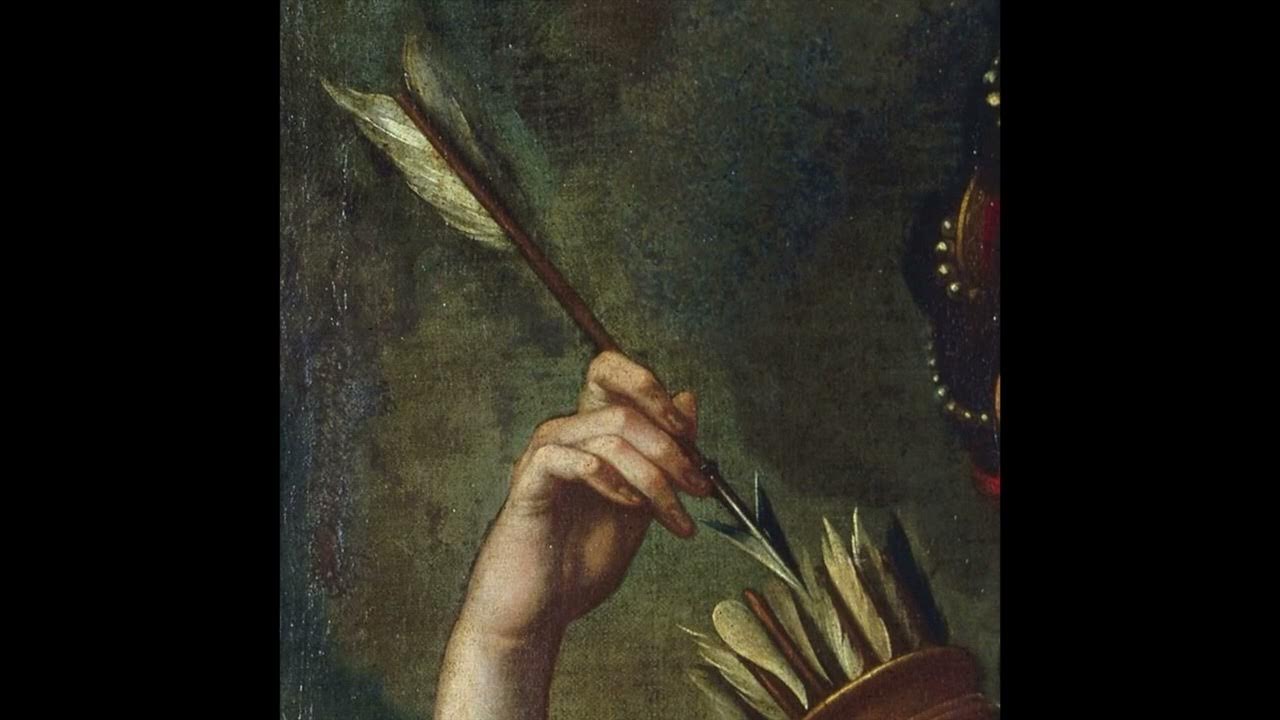
Annabelle Dinda's 'The Hand': A Masterful Deconstruction of Creative Identity
Annabelle Dinda's evocative track,
'The Hand', delves deep into the often-unspoken disparity between male and female creative experiences. Far from a simple song, it's a profound lyrical essay that scrutinizes how societal roles and expectations shape artistic expression, particularly through the powerful, multi-faceted motif of
the hand. Dinda brilliantly contrasts the confident, expansive narratives traditionally associated with male creators against the self-aware, sometimes constrained, voice of the female artist. This article explores the intricate layers of 'The Hand', dissecting its commentary on power, perception, and the quest for authentic voice in a world often dominated by established narratives. To truly grasp the depth of Dinda's craft, one might also consider
Annabelle Dinda's 'The Hand': Decoding Its Deep Lyrical Meaning.
The Male Creator: Wielding the World in His Palm
Dinda opens 'The Hand' by painting a vivid picture of the archetypal male creator. He is the "cowboy, a sailor," the "first pioneer," confidently "playing with the world in his palm." This imagery immediately establishes a sense of ownership, control, and adventurous conquest. Every song he writes isn't just a piece of art; it's a grand declaration, a "loud movie trailer / Clipping every image and sound he thinks proves he was here." This portrayal highlights a powerful, often unchallenged, narrative of male artists as definitive storytellers, architects of worlds, whose creations are indelible marks of their existence.
The lyrics further reinforce this by referencing traditional male-centric figures and events: "A hand, a spike, a physical fight, a flash of light, a curtain," or "a son, a Holy Father." These are often dramatic, public, and historically significant acts, reflecting a legacy of grand narratives where men are at the center of creation and even divine communication ("a scroll, a nod, a message from God"). The male hand, in this context, is a tool of shaping, taking, and establishing—a symbol of uninhibited command over the narrative and the world itself. He holds "the world in his palm like he made it himself," embodying an almost god-like creative authority that defines the very fabric of artistic possibility. For a deeper dive into these divine allusions, explore
The Hand of God & Man: Annabelle Dinda's Lyrical Tension.
The Female Voice: Navigating Self-Consciousness and "Symbolic Limits"
In stark contrast to the male creator's self-assured declarations, Dinda's lyrics pivot to the female experience of creative expression, revealing a landscape fraught with self-consciousness and internal tension. "Every time I open my mouth, I think, 'Wow, what a loud noise' / Still on the soapbox, just hoping I seem underwhelmed." This poignant confession captures the unique dilemma many female artists face: the struggle to be heard without being perceived as overly emotional, aggressive, or "too much." Her voice isn't a definitive trailer; it's a "loud noise," something she feels compelled to temper, even as she stands on her "soapbox."
The imagery associated with the female voice is less about grand conquest and more about subtle, often private, acts of creation and emotional navigation: "The hand, the pen, the writing again the wind around the willow," "The felt, the ice, the passage of time, the melting down the window," "The now, the then, the thinking of 'when,' the bottle in the ocean." Here, the hand is not for dominating but for writing, for feeling, for introspection. There’s a sense of longing, of being lost ("bottle in the ocean"), and critically, a societal pressure to suppress strong emotions: "The strike, the pause, the message from God forbid she shows emotion." This highlights the "symbolic limits" women encounter, where their emotional authenticity can be perceived as weakness or unruliness, rather than a powerful source of art.
Practical Tip for Emerging Artists: Dinda's lyrics serve as a powerful reminder that authenticity doesn't always have to be loud. Finding your unique voice often involves acknowledging and then strategically navigating these "symbolic limits." Don't be afraid to articulate your self-consciousness or your internal tensions; sometimes, that vulnerability is the most powerful statement of all.
"The Hand": A Multifaceted Symbol of Power, Creation, and Constraint
The central motif of
'The Hand' is more than just a recurring image; it is a dynamic symbol that shifts meaning depending on whose perspective it represents. For the male creator,
the hand embodies agency, control, and the physical manifestation of his will – "playing with the world in his palm." It's the hand that spikes, fights, and curtain-drops, dictating the grand narrative. This reflects a historical reality where men have largely held the "hand" in shaping cultural and artistic canons.
Conversely, for the female voice,
the hand transforms. It becomes "the pen, the writing again," signifying a more laborious, often repetitive, act of creation. It's the hand that feels the "felt," the "ice," enduring the "passage of time," and perhaps even witnessing the slow "melting down the window" – a metaphor for gradual change or emotional release. The contrast is stark: the male hand takes and molds, while the female hand records, processes, and quietly endures. This dual interpretation of
'The Hand' underscores the core tension Dinda explores, showing how even a universal symbol can carry vastly different connotations based on gendered experience.
Fact: Across cultures and throughout history, the hand has symbolized power, creation, and destiny. From the "Hand of God" in religious texts to the hands of artisans shaping materials, its symbolic weight is immense. Dinda's genius lies in demonstrating how this universally revered symbol can also be interpreted through a gendered lens, exposing inherent biases in how creative agency is perceived.
Beyond Rage: A Strategic Critique of "Symbolic Limits"
Perhaps the most insightful aspect of 'The Hand' comes in its explicit disclaimer: "This isn't rage, it's worth a mention / This is a fake internal tension." Dinda masterfully sidesteps the simplistic categorization of female critique as mere anger, insisting on a more nuanced, intellectual approach. She admits to spreading "out one opinion / And stand on its back to gauge attention," revealing a strategic awareness of how her message will be received. This isn't a spontaneous outburst; it's a carefully considered act of artistic communication.
Dinda clarifies, "This isn't rage, it's too specific / I like to hate symbolic limits." Her critique is not an generalized anger, but a targeted challenge against the invisible boundaries and preconceived notions that constrain creative freedom, especially for women. By labeling herself "complicit" and framing her experience as "a dream, God put me in it," she acknowledges her place within the existing structures while simultaneously questioning them. This complexity elevates the song from a complaint to a profound philosophical inquiry into the nature of artistic identity, divine connection ("does that make me His daughter?"), and the courage required to challenge deep-seated "symbolic limits" without succumbing to the stereotypes often imposed upon women who dare to speak out. Her approach suggests that true change often stems from a place of considered thought and strategic engagement, rather than just raw emotion.
Conclusion
Annabelle Dinda's 'The Hand' is a powerful, introspective, and highly relevant commentary on the gendered dynamics of creativity and self-expression. Through the recurring motif of
'The Hand', Dinda exposes the contrasting narratives of the confident male creator and the self-aware female voice. She challenges listeners to look beyond surface-level interpretations, dissecting the "symbolic limits" that permeate our artistic and societal landscapes. This song is not just a personal reflection; it's an invitation for artists and audiences alike to critically examine the stories we tell, the voices we amplify, and the hands that shape our perceived realities. Dinda's nuanced perspective offers a blueprint for how to critique existing power structures with depth, intelligence, and a compelling blend of vulnerability and strategic insight. It encourages us all to consider the hands that create, and the voices that resonate, in the grand tapestry of human expression.